The Sled Push Mistake That Wastes Most of the Workout
Quick Answer: Pushing a sled while standing too upright removes most of the leg drive and shifts the work to your arms and shoulders — leaning forward at roughly a 45-degree angle from the sled, with long strides and full hip extension, is what actually loads your legs the way sled work is meant to.
You’ve pushed a sled across the turf a dozen times and felt it mostly in your shoulders and forearms rather than your legs, which usually means one specific body-angle mistake is quietly stealing most of the workout’s intended benefit.

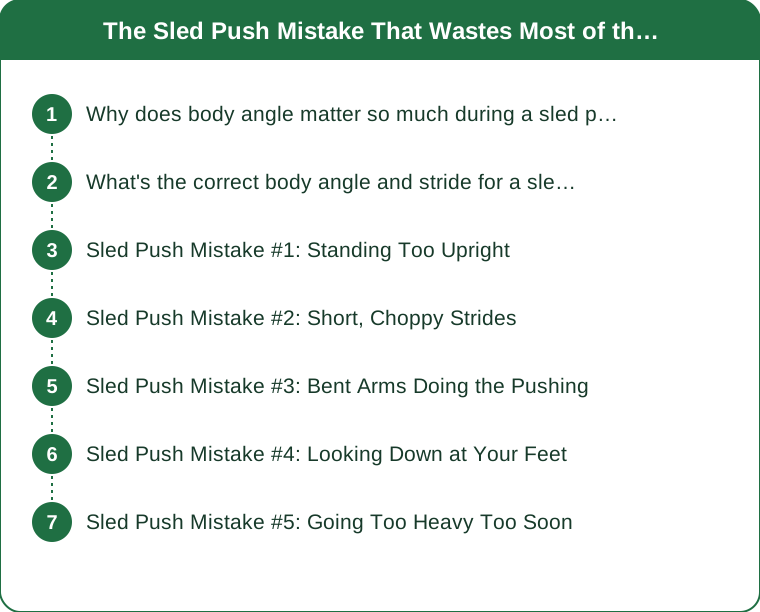
Why does body angle matter so much during a sled push?
Standing too upright while pushing turns the sled into mostly an arm and shoulder exercise, since your arms end up doing the work of pushing the handles forward rather than your legs driving the sled through hip and leg extension. A proper forward lean shifts the force generation back to where it belongs — your legs and hips.
The opposite mistake, leaning too far forward, can overload the lower back and shorten your stride, which reduces power output just as much as standing too upright.
What’s the correct body angle and stride for a sled push?
Aim for roughly a 45-degree forward lean from your hips, with your arms extended and mostly straight (not bent, which shifts load to shoulders), driving through long, full strides that fully extend your hip and knee at the back of each step. Your head should stay in a relatively neutral line with your spine rather than craning up or dropping down.
A useful cue: if you can comfortably talk without gasping between reps while going this slow, your angle is probably too upright — a correct sled push angle makes conversation difficult within the first several strides of a heavy push.
Sled Push Mistake #1: Standing Too Upright
This is the single most common issue, and it usually happens because standing upright feels more stable and controlled, especially with a heavier load. The tradeoff is that upright pushing removes hip extension almost entirely, turning a lower-body power exercise into an upper-body grinding one.

Sled Push Mistake #2: Short, Choppy Strides
Short strides keep you moving but reduce the range of hip extension at the back of each step, which is where much of the power output actually comes from. Consciously lengthening each stride, even if it means moving slightly slower, increases the training effect significantly.
Sled Push Mistake #3: Bent Arms Doing the Pushing
Bending your elbows to ‘help’ push the sled shifts load onto your triceps and shoulders instead of your legs — keep your arms extended and think of them as a rigid connection point, not an active pushing muscle.
Sled Push Mistake #4: Looking Down at Your Feet
Dropping your head to watch your feet rounds your upper back and can strain your neck over a longer set — keep your gaze forward and slightly down, in line with a neutral spine, rather than directly at the ground.
Sled Push Mistake #5: Going Too Heavy Too Soon
Loading the sled heavy before your angle and stride mechanics are solid reinforces bad form, since a too-heavy sled almost forces an upright, choppy pushing pattern just to move it at all. Mastering technique with a lighter load first, then adding weight gradually, produces far better long-term results.
How do you know if your sled push weight is appropriate?
You should be able to maintain the 45-degree angle and long strides for the full prescribed distance — if you find yourself standing up straighter as the set goes on, the load is too heavy for your current technique level.
Is sled pushing a good option for people with lower back issues?
When done with correct 45-degree angle technique, sled pushing is often considered lower-back-friendly compared to many other loaded exercises, though anyone with an existing back condition should get individualized guidance from a physical therapist first.
TL;DR:
- Standing too upright during a sled push shifts work from your legs to your arms and shoulders
- Aim for a 45-degree forward lean with long strides and full hip extension
- Keep arms extended, not bent, and look forward rather than down at your feet
- Master technique at a lighter weight before adding more load to the sled
A sled push done at the right angle should leave your legs and lungs working hard, not your forearms — if it’s the other way around, the angle is usually the fix.
Keep Reading
This article is for general informational and styling purposes only. Fit, sizing, and product availability may vary.