Why Runners Are Adding Sled Pushes to Their Training (Even Without a Gym)
Quick Answer: Sled pushes build the same forward drive-phase power runners rely on for acceleration and hill running, without the joint impact of actual sprinting. Two sled sessions a week of 4-6 short pushes can measurably improve running power output within a few weeks.
Runners chasing faster times usually reach for more mileage first. But one of the most efficient additions for building real speed and hill strength doesn’t involve running at all — it’s a loaded sled and a short stretch of ground.

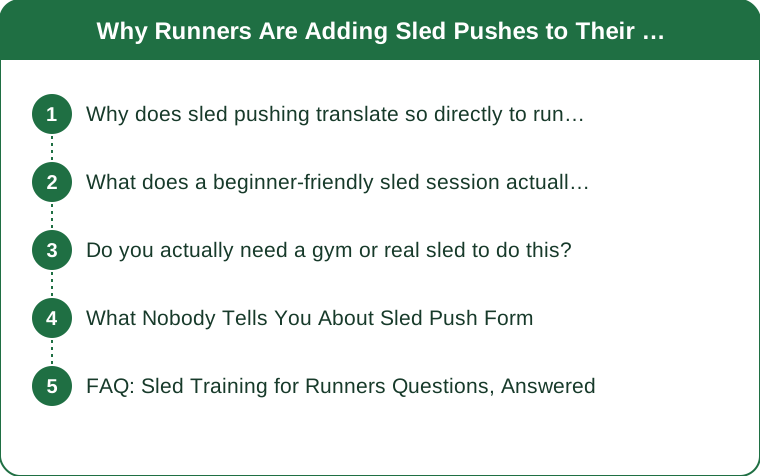
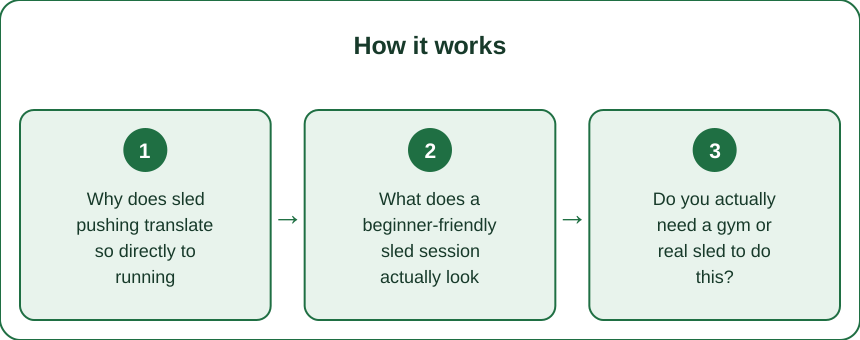
Why does sled pushing translate so directly to running performance?
Sled pushing trains the exact same triple extension pattern — hip, knee, and ankle driving through the ground — that powers a runner’s push-off, especially during acceleration and hill climbs. Unlike sprinting itself, a sled applies that load with zero impact, since your foot never leaves the ground during the push.
That combination — sprint-specific muscle recruitment without sprint-level joint pounding — is exactly why sled work shows up in serious sprint and running conditioning programs.
What does a beginner-friendly sled session actually look like?
4-6 pushes of 15-20 meters, with a load light enough to maintain a strong forward lean and quick steps — not so heavy that you’re grinding in tiny, straining steps. Rest 60-90 seconds between pushes.
Two sessions a week, ideally not on back-to-back running days, is enough to start seeing benefit within a few weeks without overloading your legs on top of mileage.

Do you actually need a gym or real sled to do this?
No — this is the part most runners don’t realize. A loaded sled substitute works fine: a weighted sandbag or a few plates on a furniture slider or towel, pushed across a grass field or driveway, trains the same pattern. Some runners even use a partner providing light resistance by holding a resistance band anchored around the torso while the runner drives forward.
The mechanism — driving hard against resistance through the ground — matters more than the specific equipment.
What Nobody Tells You About Sled Push Form
Most people push a sled leaning too upright, turning it into more of a walk than a power exercise. The actual technique cue: lean forward from the ankles, not the waist, keeping a straight line from head to back heel, driving through the balls of your feet with quick, punchy steps — closer to a sprint start position held for the whole push.
An upright posture with the hips high wastes most of the training benefit, even if the sled still technically moves.
FAQ: Sled Training for Runners Questions, Answered
How much weight should I load on the sled as a beginner?
Start light enough that you can maintain quick, driving steps for the full 15-20 meters — if you’re grinding in slow, straining steps, it’s too heavy for building running power specifically.
Will sled pushing make me bulkier, not faster?
No — for most runners doing 1-2 sessions a week at moderate loads, sled work builds power and running-specific strength rather than significant muscle mass, especially alongside regular running volume.
Can sled pushing replace hill sprints in a training plan?
It complements them well rather than replacing them outright — hill sprints add a cardiovascular and impact-tolerance component sled work doesn’t, but sled work adds pure strength with none of that impact.
TL;DR:
- Sled pushes train the same drive-phase pattern runners use for acceleration and hills, minus the impact
- Start with 4-6 pushes of 15-20 meters, twice a week
- No gym needed — a weighted sandbag on a slider or towel works on grass or a driveway
- Lean from the ankles with quick, driving steps — an upright posture wastes the training benefit
Add one short sled session this week alongside your normal mileage and see how your next hill effort feels.
Keep Reading
This article is for general informational and styling purposes only. Fit, sizing, and product availability may vary.